Service Software Available

Bespoke software

When a spreadsheet is crying for help and generic tools force the business to adapt around them, I design software around the real process.

Internal tools, platforms, APIs and integrations for businesses whose processes do not fit a generic product. Development from Galicia and remotely.

Before development

Adapt what exists or build what is needed.

Building your own software is not always the best answer. The decision depends on the process, the cost of current limitations and how much that way of working differentiates the business.

01 / Make use

An existing tool

When a product already solves most of the problem, configuring it, connecting it or adding a small custom layer will often make more sense.

  • Lower investment and a faster launch.
  • Integrations or extensions focused on what is missing.
  • Less custom code to maintain over time.
02 / Build

Bespoke software

When the process is specialist, current limitations slow work down or the tool forms part of the value the business provides.

  • Workflows, permissions and data shaped around the real process.
  • Direct integration with the systems the team already uses.
  • Phased development based on usage and business priorities.

What can be built

Software for working, controlling and connecting.

The final form depends on the problem. These are common types of solution, but architecture is not decided by choosing a card from a catalogue.

01
Internal tools

Applications for organising tasks, customers, documents, issues or any process currently scattered across email and spreadsheets.

02
Dashboards and platforms

Spaces with users, permissions, statuses and centralised information for teams, customers, suppliers or communities.

03
APIs and integrations

Connections between services that share data, prevent duplication and remove manual steps that add no value.

04
Systems with specialist logic

Configurators, generators, validation processes or rules engines that generic software cannot represent accurately.

How I work

Validate first. Build second.

The aim is to reach a useful version sooner, test the important decisions and reserve the larger investment for what has already proved worthwhile.

  1. 01

    Map the real process

    I review people, steps, exceptions, data and current tools to separate the underlying problem from its symptoms.

  2. 02

    Define the first version

    We prioritise the core that must work and explicitly record what is outside scope. Everything cannot be essential at the same time.

  3. 03

    Build with reviews

    I develop in stages and validate workflows with the people who will use them before months of untested decisions accumulate.

  4. 04

    Deploy and evolve

    I prepare testing, release, documentation and support so the system can grow from real usage rather than assumptions.

Real work

Three problems that did not fit a template.

An application launcher, a deployment-ready server and a bot with persistent data. Different products, each with logic of its own.

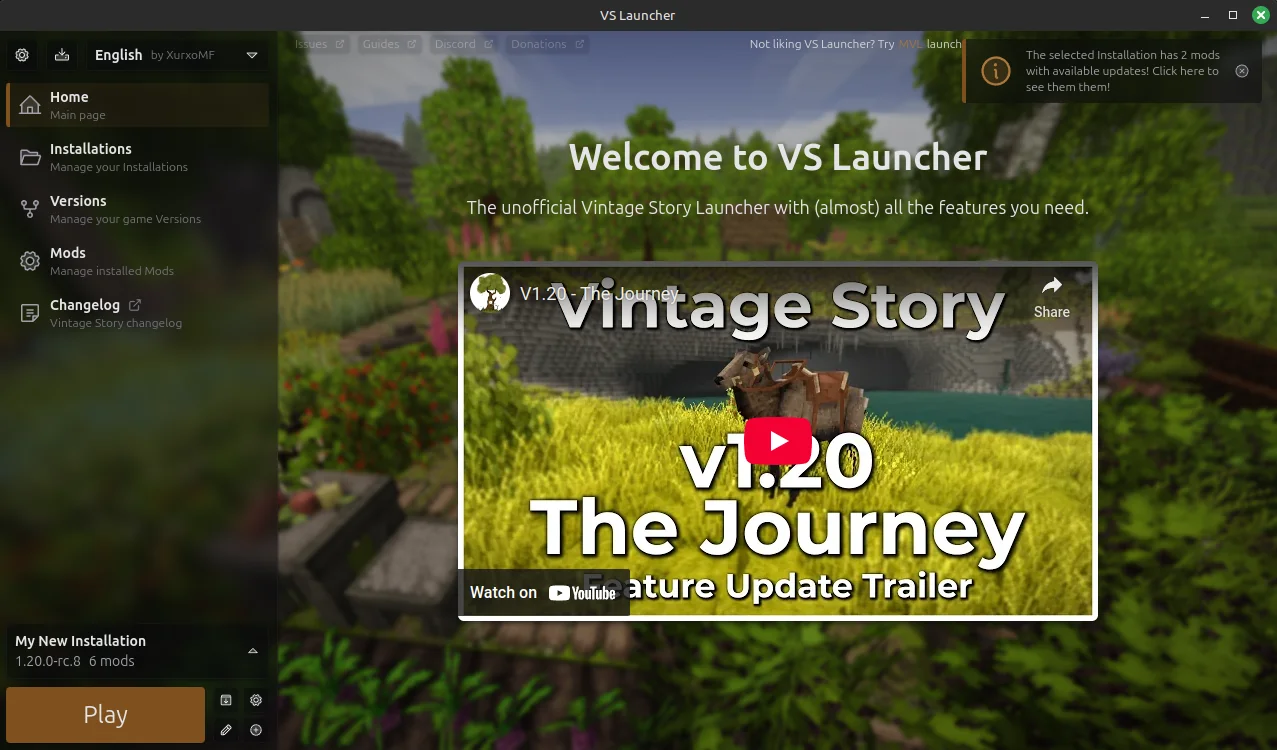
Pantalla principal de VS Launcher cunha instalación de Vintage Story preparada para xogar
01
VS Launcher

Un launcher non oficial para instalar e manter varias versións de Vintage Story, separar mundos e mods e protexer cada partida con copias de seguridade.

Portada de VSDS cos logos de Vintage Story e Docker conectados sobre un fondo escuro
02
VSDS

Imaxes Docker para despregar e manter servidores de Vintage Story con datos persistentes, versións etiquetadas e un único comando.

Portada de Modereta cun X marmoreado, cartas, favoritos e notificacións en cores neón
03
Modereta

Bot privado de Discord que detecta drops de Sofi, xestiona series e personaxes favoritos e avisa automaticamente cando aparece unha coincidencia.

Frequently asked questions

Reasonable questions before we begin.

Does everything need building from scratch?

Not always. I first check whether an existing product, integration or small bespoke layer solves the problem. Building software for its own sake is an expensive way to decorate a CV.

Can we begin with a small version?

Yes, and that is often the sensible route. We define a first version that solves the core problem and prioritise everything else for later development based on real use.

What happens about maintenance afterwards?

We agree whether you need occasional support, a bank of hours or ongoing maintenance from the outset. Code, documentation and access are prepared so the system is not a black box.

How much does bespoke software cost?

It depends on scope, users, data, integrations and technical risk. Before pricing the work, I define a first version and separate what is essential from what can evolve later.

Can it connect to the tools we already use?

Usually, provided they offer an API or another reliable integration method. I review each system before committing to scope, because an integration is only as good as the access allowed at the other end.

Who owns the code and data?

Project data and accounts remain under your control. Code ownership and handover are stated clearly in the proposal according to the type of solution, the licences used and the maintenance agreement.

Contact

Shall we talk about your next project?

Got an idea, a website in need of a renovation or a computer that only works when the technician turns up? Tell me about it. I will explain clearly what can be done, whether it makes sense and what the next step would be.

Right now

Available for selected projects, collaborations and technical enquiries.

Usual response time
1–2 working days
Location
Salvaterra de Miño, Galicia